Source Mobile Dust Free IBC Hopper for Mining, Ports, and Construction
Compare 30 mobile dust free IBC hopper models with capacities from 35 to 800t/H and delivery times of 90 to 100 days. Buyers can evaluate specifications like rail or wheel mobility, T10 liner plates, and epoxy zinc-rich primer coatings for industrial applications.
Key considerations
Products List


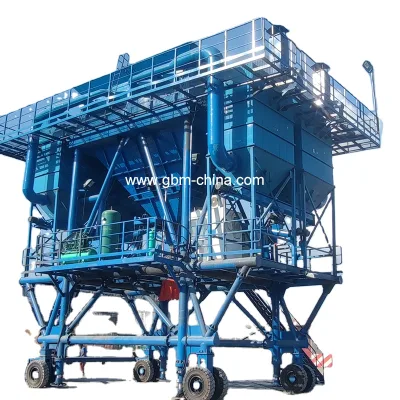


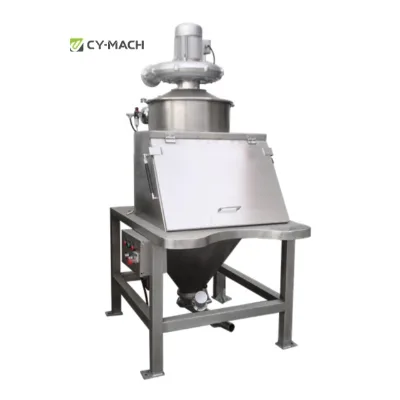


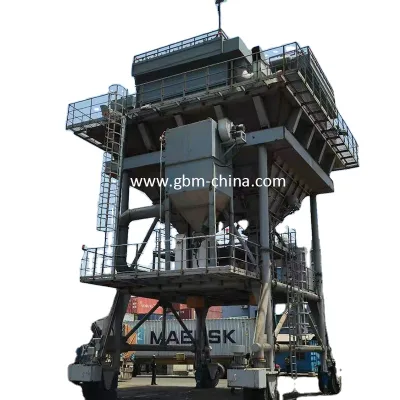
Comprehensive Sourcing Guide
Strategic Sourcing Guide for Mobile Dust-Free IBC Hoppers
Procuring mobile dust-free IBC hoppers requires a rigorous approach that balances technical specifications with logistical realities. These industrial units are critical for material handling in sectors ranging from mining to bulk chemical processing, where containment and mobility are paramount. The market presents a diverse array of configurations, from rail-mounted systems to those equipped with wheels, each serving specific operational needs. Buyers must navigate a landscape where product attributes vary significantly between models, necessitating a detailed verification process to ensure the selected equipment aligns with site-specific requirements. This guide outlines the essential factors for sourcing these units, focusing on the evidence-based analysis of available product data and industry standards.
Technical Specifications and Configuration Analysis
The technical foundation of a mobile dust-free hopper lies in its structural design, capacity, and mobility features. Based on observed product data, the market offers a wide spectrum of capacities, ranging from 35 cubic meters to 60 cubic meters, with some configurations extending up to 800 tons per hour in rated capacity. The physical dimensions are equally varied, with specific models listed with standard sizes such as 1222424351180mm, while others offer a flexible range of 30cbm to 50cbm. Buyers must verify the exact volumetric capacity against their operational throughput needs, as the "Model Number" often correlates directly with these volume constraints, such as models designated with "50m³" or specific alphanumeric codes like "QSHI-Hopper" or "GBM-HP-60-005".
Mobility is a defining characteristic of these units. The available data highlights two primary movable types: Rail Type and systems equipped with Wheels. The selection between rail and wheel systems depends heavily on the facility's infrastructure. Rail-mounted hoppers are typically suited for fixed-path operations within large industrial complexes, whereas wheeled units offer greater flexibility for variable routing. Furthermore, the discharging mechanism is a critical technical specification. Units are designed to discharge via Grab or Conveyor systems, and the destination can be a Truck or a Conveyor line. This versatility ensures compatibility with various downstream processing or transport methods.
The structural integrity of the hopper is maintained through specific material choices and protective coatings. The frame material is often a combination of Stainless Steel and Carbon Steel, selected based on the corrosiveness of the material being handled. To ensure longevity, the structure painting process utilizes an Epoxy Zinc-Rich Primer, with a minimum coating thickness of 250 microns. This specification is vital for resisting wear and tear in harsh environments. Additionally, the liner plate material, such as T10*Nm400, is crucial for handling abrasive bulk materials, preventing premature wear of the hopper body.
Compliance, Certification, and Standard Verification
When evaluating mobile dust-free hoppers, buyers must distinguish between observed product attributes and universally mandated certifications. The supplied data indicates that product standards vary, with specific references to "60CBM" and "35 cbm" as standard designations, alongside "customized" standards. It is important to note that these figures often represent capacity standards rather than safety certifications. Buyers should not assume that a listed capacity automatically implies compliance with international safety or environmental standards without explicit verification.
Certification status is not explicitly provided in the general product listings, which means buyers must actively request documentation for specific models. The "Condition" of the units is listed as "New," and the "Guarantee Period" is observed at 12 months for certain models, but these are commercial terms rather than regulatory certifications. For applications involving hazardous materials or heavy lifting, the "Swl" (Safe Working Load) is a critical parameter, with observed values such as 36t. However, the rated capacity can reach 800t/H, indicating a distinction between static load limits and dynamic throughput rates.
Buyers should verify that the "Special Features" claimed, such as Fire Resistant, Heat Resistant, and easy cleanliness, are backed by independent test results. The "Application" is listed as Hoisting Machinery, which suggests a specific use case, but the "Type" is sometimes categorized broadly as "Bearing," which may refer to a component rather than the hopper itself. Therefore, the procurement strategy must include a request for third-party certification regarding the fire resistance and heat tolerance claims, as well as verification of the structural integrity standards applicable to the specific region of operation.
Cost Drivers and Pricing Dynamics
The pricing for mobile dust-free hoppers exhibits a vast range, with observed listed prices spanning from 10 USD to 10,000,000 USD. This extreme variance is not indicative of a single product tier but rather reflects the diversity of configurations, capacities, and customization levels. A basic unit with a 35cbm capacity and standard packing will differ significantly in cost from a fully customized, rail-mounted system with 60cbm capacity and specialized liner plates. The "MOQ" (Minimum Order Quantity) ranges from 1 to 50, suggesting that buyers can source single units or larger batches, which directly impacts the unit price.
Several factors drive the cost of these units. Customization is a primary cost driver, with "Customization" listed as an available attribute. Options such as "Colour: Customized" or "Color: as Request" can influence the manufacturing process and final price. The "Packing" method, whether "Nude Packing" or "Bulk Ship," also affects logistics costs. Furthermore, the "Delivery Time" varies, with observed lead times of 90 to 100 days. Longer lead times may correlate with more complex manufacturing processes or custom orders, potentially increasing the overall cost.
Buyers should be cautious of the price range and understand that the lowest listed price may correspond to a minimal specification unit, while the highest prices likely include extensive customization, heavy-duty materials, and complex mobility systems. The "Self-Weight" of the units, observed at 85t for certain models, is another indicator of material usage and cost. Heavier units generally require more robust materials and manufacturing, leading to higher prices.
Typical Applications and Operational Fit
Mobile dust-free hoppers are designed for a variety of industrial applications, with the primary use case identified as "Hoisting Machinery." However, their utility extends to any sector requiring the efficient handling of bulk materials. The "Discharging to" and "Discharging by" attributes indicate that these hoppers are versatile, capable of interfacing with trucks or conveyor systems via grab or conveyor mechanisms. This makes them suitable for ports, mining operations, and large-scale manufacturing facilities.
The "Layer" specification, listed as "1 Layer," suggests a single-stage processing or storage capability, which is typical for standard IBC hoppers. However, the "Dust free" aspect of the product name implies a design focused on environmental control and worker safety, making them ideal for industries where dust generation is a concern, such as cement, coal, or chemical processing. The "Special Feature" of "easy cleanliness" further supports their use in industries requiring high hygiene standards.
When selecting a hopper for a specific application, buyers must consider the "Place of Origin" and "prod_origin" locations, such as Shanghai or Wuxi, China. While these locations indicate the manufacturing hub, the "Delivery Port" is often Shanghai Port, which is a critical factor for international buyers. The "Capacity" of 50t and "Rated Capacity" of 800t/H suggest that these units are designed for high-volume operations, requiring careful planning of the site infrastructure to accommodate the weight and throughput.
Supplier Evaluation and Location Considerations
Evaluating suppliers for mobile dust-free hoppers requires a focus on their ability to deliver customized solutions and meet logistical timelines. The "prod_origin" data shows a concentration of manufacturing in Shanghai and Wuxi, Jiangsu, China. These regions are known for their industrial capabilities, but buyers should verify the specific capabilities of the supplier regarding the "Customization" attribute. Not all suppliers may offer the full range of customization options, such as specific colors or specialized liner plates.
The "Delivery Time" of 90 to 100 days is a significant factor in supplier evaluation. Buyers must assess whether the supplier can consistently meet these timelines or if they offer expedited options. The "Guarantee Period" of 12 months is a standard offering, but buyers should inquire about the scope of this guarantee, including coverage for structural defects and wear parts. The "Condition" being "New" is a baseline expectation, but buyers should request proof of the manufacturing process to ensure the units are indeed new and not refurbished.
Supplier reliability is also tied to their ability to handle "Bulk Ship" or "Nude Packing" logistics. The "prod_packing" method can affect the shipping cost and the condition of the unit upon arrival. Buyers should request detailed packing lists and shipping documentation to ensure the unit arrives without damage. Additionally, the "Swl" and "Rated Capacity" should be verified against the supplier's technical documentation to ensure the claims are accurate and safe for operation.
Quality Control and Long-Term Procurement
Quality control is paramount when sourcing mobile dust-free hoppers, given the heavy-duty nature of these units. The "Structure Painting" with an "Epoxy Zinc-Rich Primer" and a "Minimum Coating Thickness" of 250 microns is a key quality indicator. Buyers should request non-destructive testing reports or visual inspection records to verify that the coating thickness meets the specified standard. The "Liner Plate" material, such as T10*Nm400, should also be verified through material certification to ensure it meets the required hardness and abrasion resistance.
Long-term procurement considerations include the availability of spare parts and the durability of the "Frame Material," which is often a combination of Stainless Steel and Carbon Steel. The "Self-Weight" of 85t indicates a substantial unit, and buyers should plan for the long-term maintenance of such heavy equipment. The "Guarantee Period" of 12 months provides a baseline for quality assurance, but buyers should negotiate extended warranty options or service contracts for critical applications.
The "Movable with" attribute, listing "Wheels / Rail," suggests that the mobility system is a critical component for long-term operation. Buyers should evaluate the wear and tear potential of the wheels or rails and ensure that the supplier offers maintenance support for these components. The "Discharging" mechanism, whether via Grab or Conveyor, should also be evaluated for its long-term reliability and compatibility with existing site infrastructure.
Comparative Analysis of Key Product Attributes
To facilitate decision-making, the following table summarizes the key attributes observed in the product data, highlighting the variability that buyers must navigate.
| Attribute Category | Observed Variations | Verification Requirement |
|---|---|---|
| Capacity | 35 cbm, 45 cbm, 50t, 60CBM, 800t/H | Match operational throughput needs |
| Mobility | Rail Type, Wheels / Rail | Verify site infrastructure compatibility |
| Dimensions | 30cbm-50cbm, 1222424351180mm | Confirm fit within facility constraints |
| Material | Stainless Steel, Carbon Steel, T10*Nm400 | Check for corrosion/abrasion resistance |
| Coating | Epoxy Zinc-Rich Primer, 250 Microns | Request thickness test reports |
| Origin | Shanghai, Wuxi, Jiangsu | Verify shipping logistics and lead times |
| Packing | Nude Packing, Bulk Ship | Assess shipping and handling costs |
| Lead Time | 90 Days, 100 Days | Align with project schedules |
This table underscores the importance of a detailed specification review. The wide range of values for each attribute means that a "one-size-fits-all" approach is ineffective. Buyers must engage in a detailed dialogue with potential suppliers to narrow down the options based on their specific operational requirements. By focusing on the technical specifications, compliance checks, and supplier capabilities outlined in this guide, buyers can make informed decisions that ensure the successful procurement and deployment of mobile dust-free IBC hoppers.
FAQs
What customization options are available for mobile dust free ibc hoppers?
Customization is available for color and specific model configurations. Buyers can request customized colors and select from various models like QSHI-Hopper or GBM-HP-60-005 to match operational needs.
Which movable types are offered for these industrial hoppers?
The available movable types include Rail Type and systems equipped with Wheels. This allows selection based on facility infrastructure, with rail systems for fixed paths and wheels for variable routing.
What is the typical delivery time for these units from China?
The delivery time ranges from 90 to 100 days depending on the specific model and customization. Most units originate from Shanghai or Wuxi and ship via Shanghai Port.
Can buyers find hoppers with a 12-month guarantee period?
Yes, a 12-month guarantee period is available for certain models. This warranty covers the condition of the unit, which is listed as new upon delivery.
What are the standard capacity and size specifications for these hoppers?
Standard capacities range from 35 cbm to 60 cbm, with some models reaching 800t/H rated capacity. Specific sizes like 12224*2435*1180mm are available alongside flexible ranges of 30cbm to 50cbm.
How are these hoppers packed for shipment?
Packing options include Nude Packing and Bulk Ship methods. The choice depends on the specific order requirements and logistics preferences of the buyer.